
Carport vs. Garage in Houston: When a Carport Cover Is Enough
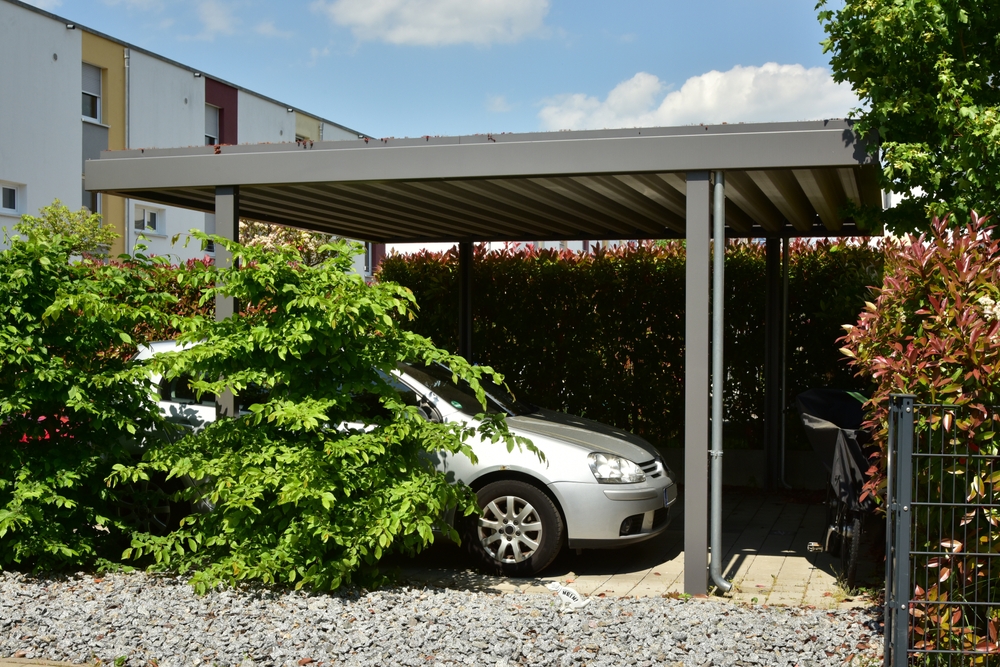
Houston drivers know what a vehicle can go through while sitting outside. Strong sun heats the interior, heavy rain can arrive quickly, and seasonal storms can leave vehicles exposed when there is no covered parking.
For homeowners deciding between building an enclosed garage and adding covered parking, the better option often comes down to what protection you actually need.
Quick answer: A carport cover can be enough in Houston when your main goal is protecting vehicles from direct sun, rain, and everyday weather exposure without creating a fully enclosed structure. A garage makes more sense when you need secure storage, enclosed workspace, additional privacy, or four-sided protection. For many properties, a properly planned carport offers a practical middle ground between uncovered driveway parking and constructing a full garage.
What Houston homeowners should know
-
A carport provides overhead protection while keeping the parking area open and accessible.
-
Houston’s long, hot summers make shade particularly valuable for vehicles parked outside every day.
-
A garage provides greater enclosure and security but generally involves a more substantial construction project.
-
Property layout, building lines, deed restrictions, and permitting requirements can affect where a carport can be installed.
-
The best option depends on whether your priority is weather protection, storage, security, cost, or creating enclosed usable space.
Why Does the Carport vs. Garage Decision Matter in Houston?
The carport vs. garage decision matters in Houston because local vehicles face intense sun, substantial rainfall, humidity, and periodic severe weather, while many properties have limited driveway or lot space for new construction. Homeowners should choose the amount of enclosure that matches their actual needs rather than automatically assuming a garage is necessary.
National Weather Service climate normals for the Houston area show average summer high temperatures in the 90s, with average August highs near 95°F. The same climate data records roughly 52 inches of normal annual rainfall.
Those conditions make covered parking useful throughout much of the year.
Neighborhood layout matters too. Properties in areas such as the Heights, Montrose, Meyerland, Spring Branch, West University, and communities throughout Harris County can differ significantly in lot dimensions, driveway placement, building lines, and deed restrictions.
ABC Awning Company helps property owners consider covered outdoor solutions for their specific space. When evaluating a project, we focus on whether the proposed cover fits the property and provides the type of protection the owner actually wants.
What Does Local Weather Tell Us About Covered Parking?
Houston weather makes overhead vehicle protection especially useful because a cover creates a barrier between a parked vehicle and the region’s frequent sun and rainfall. It cannot provide every benefit of an enclosed garage, but it can address two of the biggest reasons local homeowners want covered parking in the first place.
National Weather Service climate normals for Houston Intercontinental Airport show an annual average rainfall of approximately 51.84 inches. June’s normal rainfall is about 6 inches, while average high temperatures reach approximately 94.5°F in July and 94.9°F in August.
For a vehicle that normally sits in an uncovered driveway, a roof overhead can reduce direct exposure to those everyday conditions.
A carport should not, however, be confused with a storm shelter or completely enclosed vehicle structure. Wind-driven rain and severe weather can still affect vehicles beneath an open-sided cover.
When Is a Carport Cover Enough?
A carport cover is often enough when you primarily need shade and overhead weather protection rather than enclosed storage, climate control, or maximum security. For Houston households already using their driveway as the normal parking location, a carport can improve that space without necessarily creating a fully enclosed room.
A carport may fit your needs when:
-
Your vehicle currently stays outside year-round.
-
Your main concern is direct sunlight and rain.
-
You want easy drive-in and drive-out access.
-
You do not need walls for tool or equipment storage.
-
Your existing property layout makes a full garage unnecessary or impractical.
-
You want to preserve a more open feel around the driveway.
Homeowners near Bellaire, Garden Oaks, Memorial, and other established local communities may also find that the existing home and driveway configuration heavily influence what type of structure makes sense.
What Are the Signs That Uncovered Parking Is Becoming a Problem?
Uncovered parking may no longer be working well when routine Houston weather repeatedly leaves your vehicle excessively hot, wet, dirty, or exposed during the hours it spends at home. These everyday inconveniences often lead homeowners to consider a carport before they consider the larger commitment of garage construction.
Common signs include:
-
Your vehicle sits in direct afternoon sun for several hours each day.
-
The interior becomes extremely hot before routine trips.
-
Rain regularly complicates loading groceries, children, or other items.
-
Tree debris frequently lands directly on the vehicle.
-
You avoid using part of the driveway because it offers no shade.
-
Your household needs covered parking but does not need additional indoor storage.
-
You want protection near the home without turning the parking area into an enclosed room.
These signs do not automatically mean you need a garage. They may simply indicate that your driveway needs overhead coverage.
When Should You Talk With a Professional About a Carport?
You should talk with a professional when you are ready to determine the appropriate carport size, placement, structure, and attachment method for your property. Houston projects also need to account for local permitting rules, building lines, site conditions, and any applicable property restrictions before construction begins.
The City of Houston identifies site plan review as part of its building-permit process for applicable new structures, additions, and remodels. Its Planning and Development Department also publishes specific guidance for homeowners interested in building carports.
Homeowners can safely begin by measuring the driveway, identifying where vehicles normally park, and noting where shade is needed.
Structural design, attachment points, permitting questions, and construction requirements are better handled as part of the professional planning process.
What Common Houston Conditions Affect Carport Design?
The most important Houston conditions affecting a carport are sun exposure, rainfall, wind, drainage, available driveway space, and the property’s existing development restrictions. A successful design should respond to the actual site instead of treating every driveway the same way.
1. Strong sun exposure
West-facing parking areas can receive significant afternoon sun. The orientation and dimensions of the cover matter if shade is the main goal.
2. Heavy rainfall
The region receives substantial annual precipitation, so water needs a logical path away from the covered area.
3. Storm conditions
An outdoor structure must be properly designed and installed for its environment. A lightweight temporary shade solution is not the same thing as a permanent carport structure.
4. Existing lot configuration
Driveways in older neighborhoods can differ substantially from those found in newer suburban developments. Available width, setbacks, existing structures, and access all influence the design.
5. Building and property requirements
Houston does not have conventional zoning, but that does not mean property owners can build anywhere they choose. City development regulations, building lines, permit requirements, and deed restrictions may apply.
How Can Houston Homeowners Maintain a Carport?
Carport maintenance should focus on routinely checking the roof, supports, fasteners, drainage areas, and surrounding vegetation, particularly before and after periods of severe Gulf Coast weather. Small visual checks can help property owners notice developing problems before they become larger repairs.
A practical schedule includes checking for debris in spring, inspecting the structure during hurricane season, and looking again after any significant storm.
Homeowners can safely remove loose leaves and observe the structure from ground level. Visible structural movement, damaged supports, loose connections, significant corrosion, or roof damage should be evaluated rather than treated as routine DIY maintenance.
Keeping nearby branches trimmed can also reduce falling debris around the cover.
What Results Should You Expect From a Carport Cover?
A properly planned carport should provide reliable overhead shade and everyday weather coverage while preserving the convenience of open driveway parking. It should not be expected to provide the security, storage capacity, temperature control, or full weather enclosure that comes with a conventional garage.
For many local homeowners, that distinction is exactly why a carport works.
You gain a dedicated covered parking area without adding walls that you may not need. Depending on the layout, the space may also make entering and exiting the vehicle more comfortable during sunny or rainy weather.
The key is matching expectations to the structure.
What Mistakes Should Homeowners Avoid?
Houston homeowners should avoid choosing a carport solely by appearance or price without considering size, location, drainage, structural requirements, and applicable property rules. A cover that does not fit the driveway or provide useful shade defeats much of the purpose of the project.
Mistake: Making the cover too small.
Consequence: Part of the vehicle remains exposed, and opening doors under the cover may be awkward.
Better approach: Plan around vehicle dimensions and normal movement around the parking space.
Mistake: Ignoring sun direction.
Consequence: A cover may provide less useful shade during the hottest portion of the afternoon.
Better approach: Consider the property’s orientation before finalizing placement.
Mistake: Treating drainage as an afterthought.
Consequence: Roof runoff can create unwanted water concentration around the driveway.
Better approach: Include water management in the design.
Mistake: Assuming Houston has no construction requirements because it has no traditional zoning.
Consequence: The project may conflict with permits, building lines, or property restrictions.
Better approach: Verify applicable requirements before installation.
What Is a Common Local Carport Scenario?
A common Houston carport scenario is a homeowner with a usable driveway who parks outside every night but has little need for enclosed garage storage. The vehicle receives hours of direct sunlight, and getting into the car during a summer afternoon means dealing with a very hot interior.
The homeowner could pursue a full garage, but that would provide several features they do not actually need.
In this situation, a permanent carport cover may solve the primary problem more directly by creating shade and overhead rain protection while maintaining an open parking area.
This is a representative local scenario, not a specific ABC Awning Company project.
What Carport Solutions Can Address These Needs?
Carport cover solutions can create dedicated vehicle shade and overhead protection when an enclosed garage would exceed the homeowner’s practical needs. The appropriate configuration depends on the number and size of vehicles, available driveway area, surrounding structures, and property-specific installation requirements.
We can help homeowners evaluate how a covered parking structure may fit their outdoor space and daily routine without assuming that every property needs the same solution.
How Does a Carport Compare With a Garage?
A carport is generally the better fit for straightforward covered parking, while a garage is the better fit when enclosure, security, storage, or conditioned interior space is a priority. Neither option is universally better for Houston homeowners because they solve different problems.
| Consideration | Carport | Garage |
|---|---|---|
| Shade for vehicles | Yes | Yes |
| Overhead rain protection | Yes | Yes |
| Fully enclosed protection | No | Yes |
| Secure enclosed storage | Limited or none | Yes |
| Easy open access | Yes | Yes, when opened |
| Enclosed workspace | No | Possible |
| Project complexity | Typically less extensive | Typically more extensive |
| Best suited for | Covered parking | Parking plus enclosed space |
If your wish list is mostly “keep the car out of the sun and rain,” a carport deserves serious consideration.
If the list includes “store tools, lock everything inside, create a workshop, and fully enclose the vehicle,” a garage is more likely to match your goal.
Where Can Carport Covers Make Sense Around Houston?
Carport covers can make sense throughout Houston and surrounding Harris County communities where homeowners have uncovered driveways and need practical shade or rain protection. Property layouts vary considerably between neighborhoods, so the appropriate size and configuration should be based on the specific site.
From Spring Branch and Garden Oaks to Meyerland, Memorial, Bellaire, and surrounding communities, local homes can present very different parking arrangements. Those differences should shape the solution rather than forcing a standard design onto every property.
What Can Happen If You Keep Putting Off Covered Parking?
Waiting to add covered parking mainly means continuing to accept the same daily exposure that prompted you to consider a cover in the first place. In Houston, that can mean more days of parking in direct summer sun, entering a hot vehicle, and loading or unloading without overhead protection during rain.
Covered parking is not an emergency for most homeowners. It is a practical property improvement.
If your current parking arrangement consistently causes inconvenience, evaluating your options sooner can help you decide whether a carport solves enough of the problem without moving to full garage construction.
FAQ About Carports and Garages in Houston
Is a carport enough for Houston weather?
A carport can be enough for Houston weather when your goal is everyday shade and overhead rain protection. It will not provide the complete enclosure of a garage, and wind-driven rain or severe storms can still expose a vehicle. Homeowners should choose one based on the level of protection they actually need.
Does a carport help with Houston’s summer heat?
A carport can help by keeping direct sunlight off a parked vehicle for at least part of the day, depending on the cover’s placement and the sun angle. Houston’s average summer highs reach the 90s, so reducing direct solar exposure is one of the most practical reasons residents consider covered parking.
Do I need a permit to build a carport in Houston?
A carport project may require City of Houston permitting and review, so requirements should be confirmed for the specific property before construction. The city’s Planning and Development Department provides carport guidance and notes that building permits are required for new construction within the city. Deed restrictions may also affect a project.
Is a garage always better than a carport in Harris County?
No, a garage is not automatically better for Harris County homeowners because it provides features some households do not need. If you need enclosed storage and security, a garage has clear advantages. If you mainly want convenient shade and rain protection for vehicles, a carport may address the goal more directly.
Can a carport protect my vehicle during a hurricane?
A carport should not be treated as a hurricane shelter or guarantee of vehicle protection during severe weather. Open sides leave vehicles potentially exposed to wind, wind-driven rain, and debris. Permanent outdoor structures should be properly designed and installed, but homeowners should continue following official severe-weather guidance when tropical systems threaten the Houston region.
Can I put a carport anywhere on my Houston property?
No, homeowners should not assume a carport can be placed anywhere on a Houston lot. Building lines, setbacks, site-plan requirements, deed restrictions, driveway configuration, and other property conditions may affect placement. The City of Houston reviews development plans for requirements that can include setbacks, access, and parking considerations.
Is a carport useful during Houston’s rainy months?
Yes, a carport can make everyday vehicle access more convenient during rainy weather by providing overhead coverage where you park. National Weather Service climate normals show substantial rainfall throughout the year in the region. A cover can be particularly useful when loading groceries, bags, children, or equipment during routine rainfall.
How do I decide between a one-car and two-car carport?
Choose the size according to the vehicles you regularly park, available driveway dimensions, and the clearance needed around them. A Houston household with two daily vehicles may benefit from wider coverage, while another property may have room for only a single parking bay. Site measurements should guide the decision.
Get Practical Covered Parking for Your Houston Property
A carport does not need to do everything a garage does to be worthwhile. For local homeowners who mainly want useful shade, overhead rain protection, and convenient driveway parking, the simpler solution may be exactly enough.
Create a More Comfortable, Protected Parking Space
We can help you explore a carport cover that fits your property, parking needs, and Houston lifestyle.
Categorised in: Carport Canopy